Automotive window tinting blocks harmful ultraviolet rays and reduces interior heat by applying a specialized film to vehicle glass that filters solar radiation. These films reject most UV and infrared light while still allowing visible light to pass through, maintaining clear driver visibility while keeping the cabin cooler and more comfortable.
Understanding the Science Behind Automotive Window Tinting
Sunlight contains several forms of energy that affect the interior of a vehicle. When solar radiation passes through untreated glass, it can quickly increase interior temperatures and expose passengers and interior materials to damaging ultraviolet light.
Automotive tint films work by controlling how these wavelengths pass through the glass. Instead of simply darkening the window, modern tint technology selectively filters specific types of solar radiation.
Sunlight reaching a vehicle contains three primary components.
Ultraviolet Radiation
Ultraviolet radiation carries high energy and is responsible for skin damage and fading interior surfaces. Extended exposure to UV rays can cause dashboard cracking, fabric discoloration, and plastic deterioration.
High-quality window tint film is designed to block nearly all ultraviolet radiation before it enters the cabin. This protective layer reduces long-term sun damage for both passengers and interior surfaces.
Visible Light
Visible light is the portion of sunlight that the human eye detects. This spectrum allows drivers to maintain clear vision when looking through windows.
Tint film regulates the amount of visible light entering the vehicle. Instead of completely blocking it, the film moderates brightness and glare so visibility remains comfortable and safe.
Infrared Radiation
Infrared radiation is responsible for most of the heat you feel when sunlight enters a car. It carries thermal energy that quickly warms the interior of the vehicle.
Tint films reduce heat by rejecting a portion of this infrared radiation before it can enter the cabin.
How Window Tint Blocks UV Rays
Automotive tint films contain microscopic compounds embedded within layers of polyester material. These compounds absorb or reflect ultraviolet radiation before it can pass through the glass.
Several mechanisms help block UV energy.
First, UV-absorbing molecules capture ultraviolet photons and convert that energy into small amounts of harmless heat dispersed across the film surface.
Second, specialized particles within the film scatter ultraviolet light, preventing it from penetrating into the interior.
Third, multilayer film construction prevents UV radiation from traveling deeper into the vehicle.
These combined effects enable tint films to provide strong protection against prolonged exposure to the sun. Many vehicle owners researching window tinting in Knoxville, TN, discover that UV protection is one of the primary reasons drivers choose to install tint on their vehicles.
How Tint Reduces Heat Inside the Vehicle
Heat reduction is another important benefit of window tinting. Infrared radiation from sunlight is the primary source of heat buildup inside parked or moving vehicles.
Tint films reduce this heat through a process known as infrared rejection.
The Heat Rejection Process
- Sunlight strikes the vehicle window.
- Infrared wavelengths interact with specialized particles within the tint film.
- Some of the energy is reflected away from the glass surface.
- Another portion is absorbed and dispersed within the film layers.
- Less heat energy enters the vehicle interior.
Because less infrared radiation reaches the cabin, interior temperatures remain more stable. This makes entering the vehicle after it has been parked in sunlight noticeably more comfortable.
Drivers comparing Knoxville, TN, window tinting options often look at heat rejection capabilities because they directly affect everyday comfort during warm weather.
Why Visibility Remains Clear With Modern Tint
A common concern among drivers is whether tint will reduce visibility. Modern automotive tint films are designed specifically to maintain clear vision while controlling solar energy.
Visibility remains clear because tint targets wavelengths outside the visible spectrum.
Ultraviolet and infrared radiation exist beyond what the human eye can see. Tint films block or redirect certain wavelengths while allowing most visible light to pass through.
Several features help maintain optical clarity.
- Smooth polyester layers prevent distortion
- Advanced adhesives eliminate haze between glass and film
- Microscopic particles filter energy without creating visible grain
These design elements allow tint to reduce glare while maintaining clear outward vision for drivers.
Comparison of Common Window Tint Film Technologies
Different tint films use different materials and technologies to filter solar radiation. The technology used in the film layers determines how effectively the tint blocks heat and UV rays.
| Film Technology | Heat Reduction | UV Protection | Visibility |
| Dyed Film | Moderate | Strong | Good clarity |
| Metalized Film | Moderate to High | Strong | Slightly reflective |
| Carbon-Based Film | High | Strong | Very clear |
| Ceramic-Based Film | Very high | Strong | Excellent clarity |
Drivers evaluating window tinting Knoxville services often compare these technologies to determine which type best meets their needs for comfort and visibility.
Step-by-Step Construction of Automotive Tint Film
Automotive tint film contains several layers that work together to filter sunlight.
- Protective outer coating
Helps resist scratches and surface wear. - Structural polyester layer
Provides durability and flexibility. - Solar filtering layer
Contains the compounds that absorb or reflect UV and infrared energy. - Optical adhesive layer
Bonds the film smoothly to the glass surface. - Protective installation liner
Removed during installation.
Although the film itself is thin, the layered design allows it to control multiple wavelengths of solar radiation simultaneously.
Applying Our Spectral Shield Framework to Solve This
To explain how tint technology filters sunlight, we use a proprietary analytical model known as the Spectral Shield Framework.
This framework examines how solar wavelengths interact with the layers of window tint film.
Spectrum Identification
The first stage separates sunlight into its major wavelength groups.
- Ultraviolet radiation that causes skin and internal damage
- Visible light is responsible for brightness and visibility
- Infrared radiation responsible for heat buildup
Each type of radiation requires a different filtering approach.
Layered Filtering Strategy
The second stage evaluates how tint film layers interact with these wavelengths.
UV-absorbing compounds capture ultraviolet radiation.
Reflective or scattering particles redirect infrared heat energy.
Optical layers allow controlled transmission of visible light.
This selective filtering approach ensures comfort without reducing visibility.
Optical Clarity Balance
The third stage measures how clearly drivers can see through the tinted glass.
Maintaining clarity requires precise control over film thickness, particle size, and adhesive quality.
Heat Rejection Efficiency
The final stage evaluates how effectively the tint prevents infrared radiation from entering the vehicle interior.
This step explains why some films reduce interior temperatures more effectively than others.
Drivers searching for window tint in Knoxville often benefit from understanding how this spectral filtering approach works in practice.
Common Misconception About Automotive Window Tint
Myth: Darker Tint Always Means Better Heat Reduction
Many people assume darker windows automatically block more heat. In reality, darkness alone does not determine heat rejection.
Some darker films absorb visible light but allow a large amount of infrared radiation to pass through. This means they may look dark but still allow significant heat into the cabin.
On the other hand, films designed with advanced infrared filtering technology may appear lighter but block more heat.
Effective tint performance depends on film construction and spectral filtering, not on how dark the window appears.
Additional Benefits of Automotive Window Tint
Beyond reducing heat and providing UV protection, window tinting offers several everyday advantages for drivers.
Reduced Glare
Bright sunlight and road reflections can create uncomfortable glare while driving. Tint helps reduce excessive brightness and improves visual comfort.
Interior Preservation
UV radiation gradually damages interior surfaces. Tint reduces exposure that leads to fading, cracking, and discoloration.
Improved Driving Comfort
By reducing heat buildup and glare, tinted windows make long drives more comfortable in bright, sunny conditions.
In Summary
Automotive window tinting reduces heat and blocks ultraviolet radiation by applying a multilayer film that filters solar energy before it enters the vehicle. By targeting specific wavelengths such as UV and infrared radiation, tint films protect passengers and interior materials while maintaining clear driver visibility.
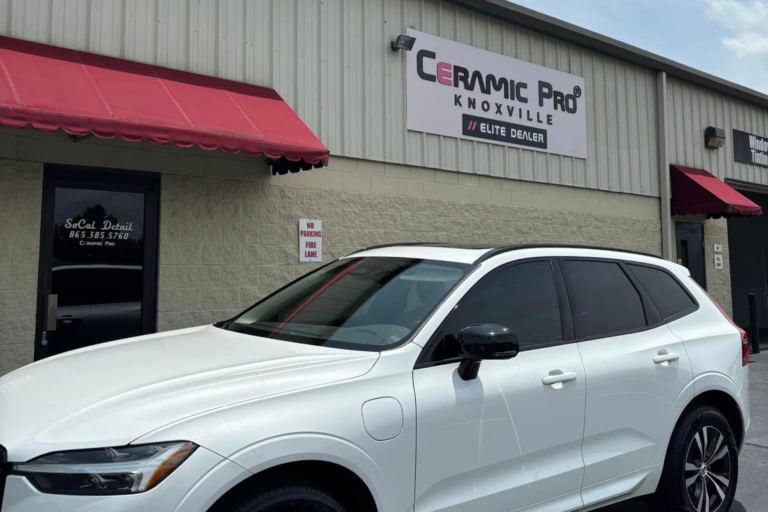
Modern tint technology relies on precise optical engineering rather than simply darkening glass. This allows vehicles to stay cooler, reduce glare, and improve overall driving comfort without interfering with safe visibility. Professionals at Ceramic Pro Knoxville specialize in advanced tint solutions that use multi-layer films to manage heat and light transmission more effectively than traditional tint methods.
To learn more about professional window tinting solutions, contact us today.
People Also Ask
Does window tint block all UV rays?
Most modern automotive tint films block nearly all ultraviolet radiation. This helps protect both passengers and interior materials from prolonged exposure to the sun.
Will window tint make my car cooler?
Tint films reduce heat buildup by rejecting infrared radiation from sunlight. This helps maintain a more comfortable interior temperature.
Does tint affect visibility while driving?
Properly installed tint allows visible light to pass through the glass while filtering other wavelengths, so drivers can maintain clear vision.
Why does my car still get warm even with tint?
Tint significantly reduces heat but cannot eliminate all solar energy entering the vehicle. Factors such as sunlight intensity, vehicle color, and glass surface area still influence interior temperature.