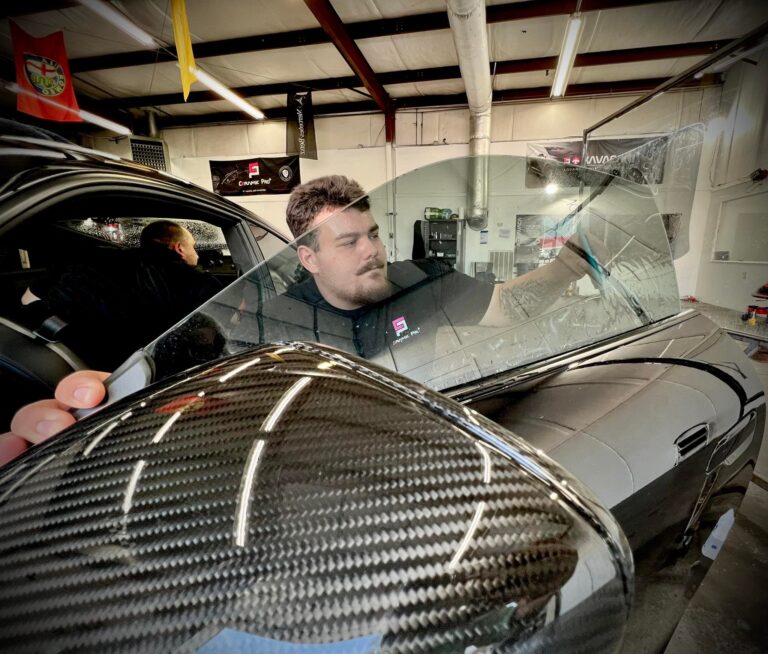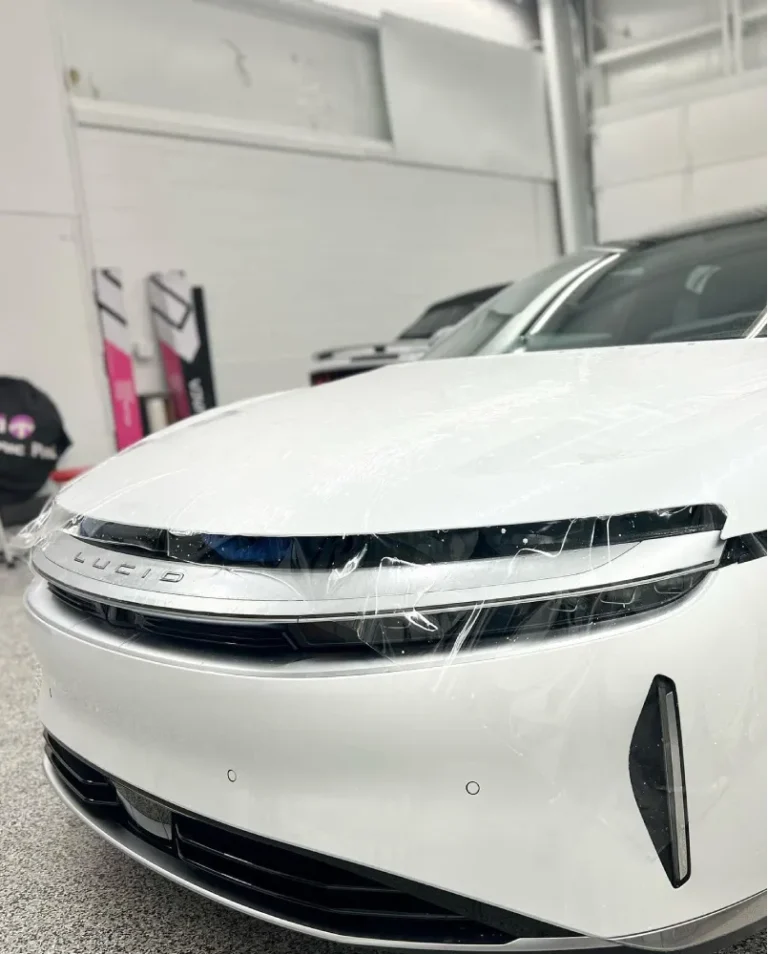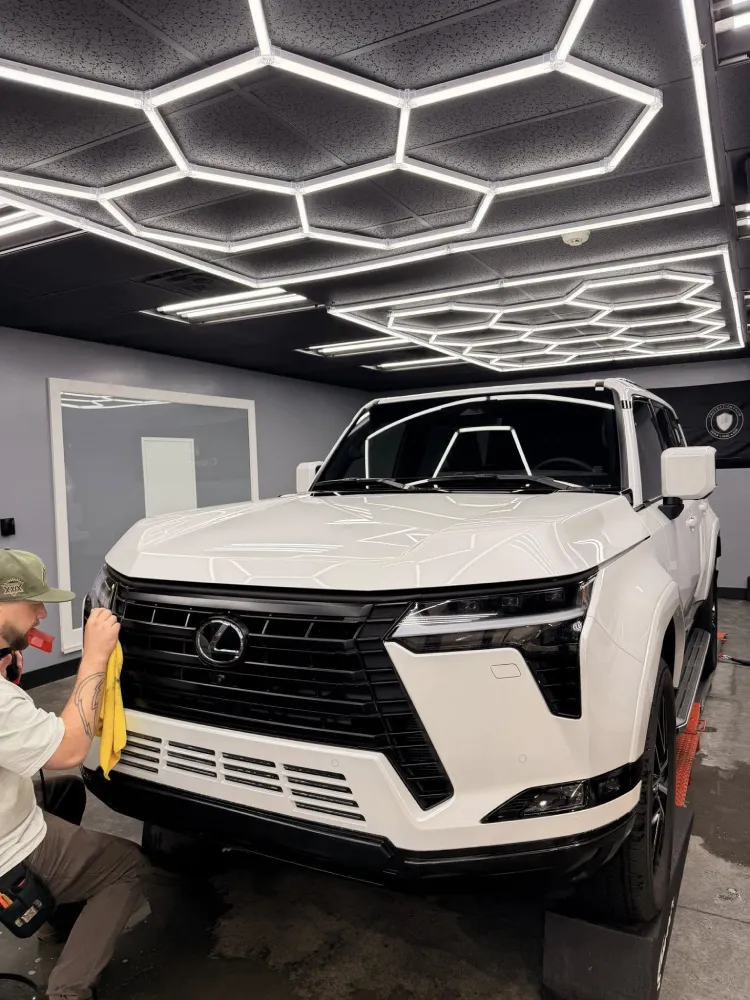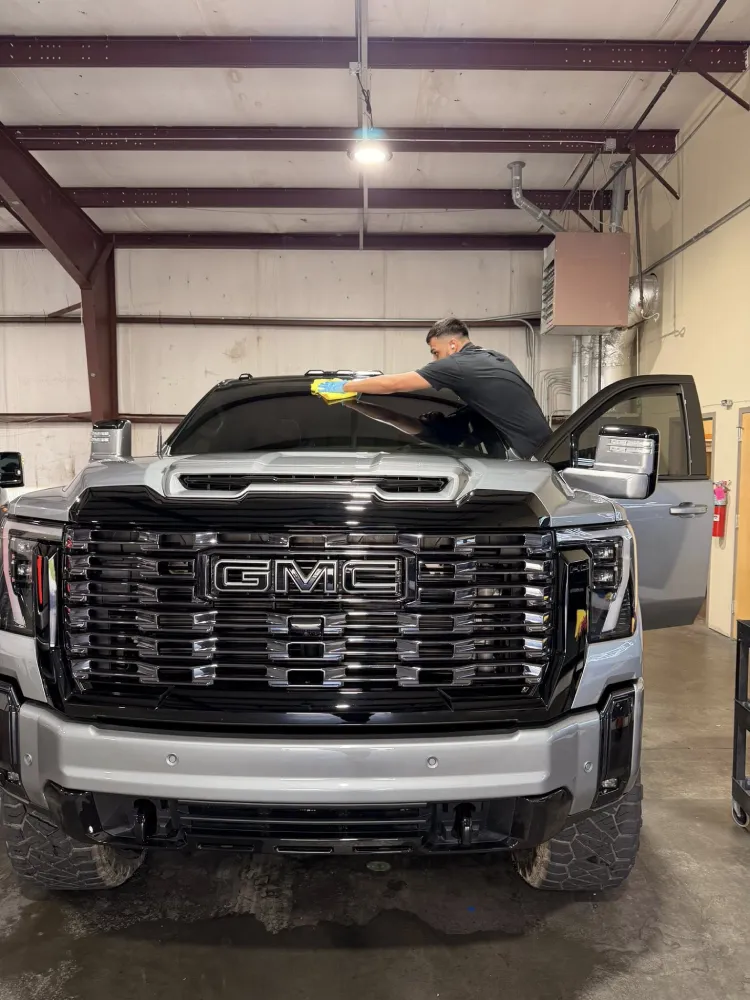
Ceramic coating protects automotive paint by forming a chemically bonded layer that reduces UV damage, oxidation, and environmental contamination. It helps preserve gloss and makes cleaning easier, but it does not prevent rock chips or deep scratches, nor does it eliminate the need for maintenance. Its main value is long-term preservation of paint condition and improved resistance to surface contaminants.
How Ceramic Coating Protects Automotive Paint (Technical Overview)
Ceramic coating is a liquid polymer that chemically bonds to a vehicle’s clear coat and cures into a semi-permanent protective layer. Unlike waxes or sealants that sit on the surface, it integrates at a molecular level to create a more durable and stable barrier.
Once cured, this layer increases surface tension, reducing how strongly dirt, grime, and environmental contaminants adhere to the paint surface.
Chemical Bonding and Cure Process
The protective layer forms through a cross-linking reaction involving silane-based compounds. As the coating cures, it creates a dense structure that improves resistance to UV exposure, oxidation, and chemical contamination.
This is why professionally applied coatings can last multiple years under proper maintenance conditions.
Hydrophobic Performance in Real Driving Conditions
One of the most noticeable benefits is water’s behavior. Rainwater and light debris bead and roll off more easily compared to untreated paint.
In practical terms, this means:
- Reduced dirt adhesion
- Easier routine washing
- Lower risk of swirl marks when proper wash techniques are used
UV and Environmental Resistance
Clear coat degradation is largely caused by UV exposure and airborne pollutants. Ceramic coating in Knoxville, TN, slows this process by acting as a protective barrier that reduces direct environmental contact with the paint surface.
Ceramic Coating Compared to Wax and Sealants
| Protection Type | Typical Lifespan | Protection Strength | Gloss Retention | Maintenance Needs |
| Wax | Weeks | Low | Short-term | High |
| Sealant | Months | Moderate | Medium | Moderate |
| Ceramic Coating | Years | High | Long-term | Low |
The key difference is durability and resistance to breakdown. Wax and sealants degrade quickly under heat, detergents, and weather exposure, whereas Knoxville ceramic coatings maintain their structure for much longer periods.
What Ceramic Coating Actually Does (and Does Not Do)
Real Benefits You Can Expect
Ceramic coating improves vehicle appearance and maintenance efficiency in several meaningful ways:
- Enhances gloss depth and paint clarity
- Reduces contamination bonding on the surface
- Makes washing faster and less abrasive
- Helps minimize light swirl formation
- Improves resistance to chemical staining from organic debris
Common Misunderstandings
Many expectations about ceramic coating are exaggerated. It does NOT:
- Prevent rock chips or physical impact damage
- Replace regular washing or maintenance
- Repair scratches or paint defects
- Eliminate the need for proper surface preparation
It is a preservation layer, not a corrective or protective shield against physical damage.
Is Ceramic Coating Worth the Investment?
For many vehicle owners, the decision comes down to long-term value rather than immediate appearance alone.
While ceramic coating requires a higher upfront investment than traditional wax or paint sealants, its extended durability often reduces the frequency of paint protection services over the vehicle’s life.
Ceramic coating may be particularly beneficial for:
- Daily drivers exposed to UV radiation and weather
- New vehicles where preserving factory paint is a priority
- Luxury, performance, or collector vehicles
- Owners who want easier maintenance and cleaning
The value increases when the coating is installed on properly corrected paint and maintained according to manufacturer recommendations.
For owners planning to keep a vehicle for several years, ceramic coating in Knoxville can help preserve resale appearance while reducing ongoing paint protection maintenance.
Professional Application Process (Why Preparation Matters Most)
The performance of ceramic coating depends heavily on installation quality. Even premium coatings will underperform if applied on poorly prepared surfaces.
Step-by-Step Installation Workflow
- Decontamination Wash – Removes tar, iron particles, and embedded contaminants
- Paint Correction – Machine polishing removes swirl marks and defects
- Surface Preparation – IPA wipe ensures bonding readiness
- Coating Application – Applied evenly in controlled sections
- Curing Process – Allows full chemical bonding and hardening
Each step is essential. Skipping or rushing preparation directly reduces coating lifespan and performance.
Applying our “Surface Integrity Method” to solve this
The “Surface Integrity Method” is a structured installation framework designed to ensure consistent coating performance by controlling every stage of surface preparation and application.
It focuses on:
- Eliminating microscopic contamination before application
- Standardizing paint correction quality across all panels
- Maintaining controlled environmental conditions during installation
- Ensuring uniform curing for predictable durability
This system improves consistency between vehicles and reduces variability in long-term coating performance.
Common Industry Myth: Ceramic Coating Makes Cars Maintenance-Free
One of the most common misconceptions is that ceramic coating removes the need for maintenance entirely.
In reality, coatings reduce maintenance effort but do not eliminate it. Vehicles will still collect:
- Dust
- Road film
- Organic contaminants
The difference is that these contaminants do not bond as strongly, making washing significantly easier and safer for the paint surface.
Neglecting maintenance can still reduce gloss and hydrophobic performance over time.
Key Performance Characteristics
- Surface Hardness: Resistance to light swirl marks during washing
- Hydrophobicity: Ability to repel water and reduce contamination adhesion
- UV Resistance: Protection against sunlight-induced oxidation and fading
- Chemical Resistance: Resistance to acidic contaminants like bird droppings and bug residue
- Gloss Enhancement: Improves optical clarity and paint depth
- Durability Range: Multi-year performance depending on environment and maintenance
Real-World Factors That Influence Longevity
Driving Environment
Highway driving increases exposure to debris, while urban driving increases exposure to brake dust and other pollutants.
Storage Conditions
Vehicles stored indoors typically maintain coating performance longer than those exposed to constant outdoor UV exposure.
Maintenance Habits
Improper washing techniques are one of the leading causes of premature swirl marks and reduced coating performance.
When Is the Best Time to Apply Ceramic Coating?
The ideal time to install ceramic coating is when the paint is in its best possible condition.
New vehicles are often excellent candidates because they typically require less paint correction before protection is applied. However, even new vehicles frequently arrive with minor swirl marks, transport contamination, or dealership-installed defects that should be addressed before coating.
Older vehicles can also benefit significantly from Knoxville, TN, ceramic coating after proper paint correction.
Common situations where ceramic coating provides the greatest benefit include:
- Immediately after purchasing a new vehicle
- Following professional paint correction
- After repainting and full paint cure
- Before seasons with intense UV exposure or harsh weather conditions
Applying a coating after defects have been corrected helps lock in the improved finish and maximize long-term results.
Ceramic Coating Maintenance: Best Practices for Maximum Lifespan
Although ceramic coatings reduce maintenance requirements, proper care remains essential for preserving hydrophobic performance and appearance.
To maximize coating longevity, vehicle owners should:
- Wash regularly using pH-neutral automotive shampoos
- Use microfiber wash media and drying towels
- Remove bird droppings, bug residue, and tree sap promptly
- Avoid automatic brush car washes
- Schedule periodic inspections or maintenance treatments when recommended
Over time, minerals, road film, and environmental contaminants can accumulate on the coating surface, reducing water-beading performance. Professional decontamination maintenance can often restore much of the coating’s original behavior without requiring reapplication.
Consistent maintenance helps ensure the coating continues to maintain gloss, resist contamination, and remain easy to clean throughout its service life.
Why Installation Quality Matters More Than Brand
Even high-end coatings can fail prematurely if applied incorrectly. The most important factors influencing durability are surface preparation, correction quality, and environmental control, not brand alone.
Professional systems prioritize preparation because coatings bond permanently to whatever surface condition exists at the time of application.
About SoCal Detail of Knoxville, TN
Ceramic Pro Knoxville SoCal Detail specializes in professional paint correction and ceramic coating services focused on long-term paint preservation.
Each vehicle undergoes a structured evaluation process to determine paint condition before coating application. This ensures defects are corrected and surfaces are properly prepared before sealing them under a protective layer.
The approach prioritizes correction-first detailing, meaning coatings are applied only after the paint has been properly refined and inspected for consistency. This results in improved durability, better gloss retention, and more predictable long-term performance.
In Summary
Ceramic coating is a highly effective long-term paint preservation solution when properly installed and maintained. It enhances gloss, improves cleaning efficiency, and slows environmental degradation, but it does not eliminate the need for maintenance or prevent physical damage.
The real difference in performance comes from the quality of preparation and installation precision, not just the coating itself. Ceramic Pro Knoxville emphasizes that proper surface correction, thorough preparation, and expert application are essential to maximizing the durability and effectiveness of a ceramic coating.
For professional evaluation and installation, contact us today to determine the most effective paint protection strategy for your vehicle.
Frequently Asked Questions
How long does ceramic coating last?
Typically 2–7 years depending on maintenance and environmental exposure.
Does ceramic coating remove scratches?
No. It does not remove scratches, but it can reduce the formation of new swirls.
Is ceramic coating worth it for daily drivers?
Yes, especially for vehicles exposed to UV, rain, and frequent washing.
Can ceramic coating replace waxing?
Yes, because it provides significantly longer-lasting protection.
What damages ceramic coating the most?
Improper washing techniques and lack of maintenance.